


Skype for Business for Android
Microsoft Corporation
I approached Skype for Business as a practical Android work tool rather than as a replacement for every messaging app on a phone. Its purpose is clear: it brings the Lync and Skype workplace experience to a mobile device, with the emphasis on staying connected to an organization while away from a desk. That makes the first decision fairly simple. If your employer already uses the Skype for Business environment, this app can be useful because it keeps work conversations and availability close at hand. If you are choosing a communication service from scratch, the answer depends much more on your existing workplace setup than on the app alone.
Microsoft Corporation is the developer, and the app sits in the business category. It is free to install and has an Everyone content rating, so the barrier to trying it is low. It has been available since March 29, 2013, and its long presence explains why some people still encounter it in established company environments. At the same time, its average rating is 3.7 from around 174 thousand ratings, which suggests a useful but uneven mobile experience rather than a universally loved one.
How I Would Decide Whether It Belongs on Your Phone
My first question would not be “Is this the best chat app?” I would ask, “Does my organization already depend on Skype for Business?” That distinction matters. The app is designed around a business communication system, so its value comes from connecting to the right workplace account and contacts. A personal user looking for casual chats has many simpler choices, while an employee whose colleagues, meetings, and presence information are tied to this platform has a more convincing reason to keep it installed.
I would also consider how often I work away from a computer. Someone who spends most of the day at a desk may only need the desktop experience, but a mobile client becomes more worthwhile for commuting, visiting customers, moving between offices, or handling a short urgent conversation without opening a laptop. The strongest case is not constant phone use. It is continuity: being able to see what is happening at work and respond when the computer is not in front of you.
There is another important decision criterion: whether your company has already configured the service for mobile access. Installing an app does not, by itself, create a business network or guarantee that an account will work. In a managed workplace, sign-in details and organizational settings can determine the experience. I would check with the company’s IT team before spending time troubleshooting, especially if the app accepts the account on one device but behaves differently on another.
Related News

Why WhatsApp Messenger Still Makes Everyday Communication Feel Easy

Jurassic World: The Game Is the Better Dino Tycoon for Strategic Players

Threads in Real Life: Who Should Join, Lurk, or Leave

How SHEIN Turned Shopping Into an Endless Content Feed

How to Make Fortnite Feel Smarter on Mobile

Should You Switch to Microsoft Outlook on Mobile?
The app’s scale is notable. It has passed ten million installs, so it is not an obscure experiment, and its business focus is well established. Still, popularity should not be confused with suitability. A large install base can include many people who were asked to install the app by an employer, and that is different from choosing it freely for personal communication.
What the Mobile Experience Is Good At
In my experience with workplace communication apps, the most valuable mobile feature is often not sending a message. It is quickly understanding who is reachable and what needs attention. Skype for Business is built for that kind of work context. Instead of treating every conversation like a casual text thread, it places communication inside an organizational setting, where availability and business contacts matter.
That makes it particularly useful for a small but realistic situation. Imagine leaving a meeting and realizing that a colleague needs a decision before the end of the afternoon. Rather than waiting until you return to your desk, you can use the mobile app to check the relevant work contact and continue the conversation from your phone. If the matter is too complex for a few messages, the mobile client can serve as the starting point for a more direct conversation, provided your organization’s setup supports the required communication.
Gallery
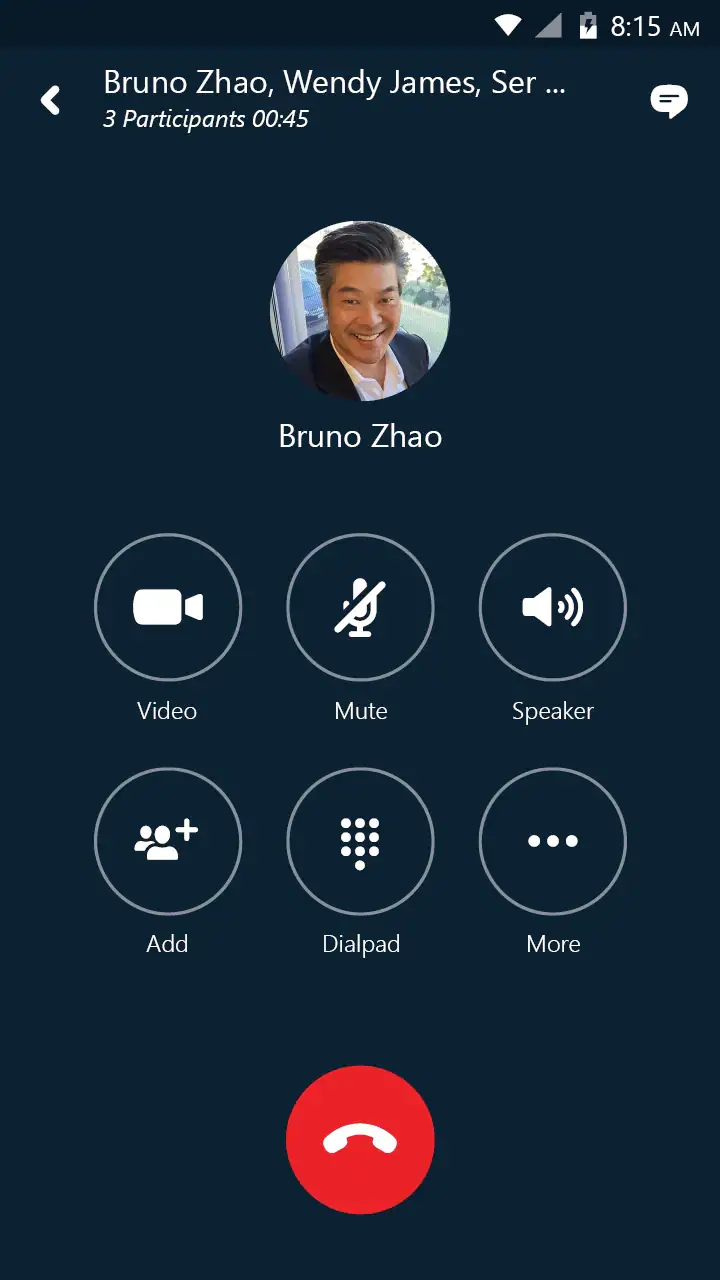
I also like the idea of using the phone as a temporary bridge rather than a complete office. A mobile screen is not ideal for long discussions, detailed planning, or reviewing large amounts of information. It is better for a quick reply, a status check, or keeping a conversation moving until you can switch back to a larger screen. That limitation is not necessarily a flaw; it helps define the app’s sensible role.
A less obvious benefit is the separation between work communication and personal messaging. If your colleagues already use this system, keeping those conversations inside a business-focused app can reduce the chance of mixing a client question with a family chat or a personal group. That separation is valuable for people who use one phone for everything and want a clearer boundary between professional and private conversations.
Small Habits That Make It More Useful
I would treat notifications as something to tune rather than simply enable and forget. A business app can become distracting if every message receives the same level of attention. For someone who receives frequent workplace conversations, it is more practical to decide which interactions need an immediate response and which can wait until a break. The right notification approach depends on the organization and the phone, but the general principle is simple: use the mobile app for reachability, not for being interrupted every minute.
I would also avoid starting complicated work inside a phone conversation when the necessary background is on a computer. A short mobile exchange can clarify the next step, but trying to reconstruct a long project from a small screen is inefficient. My preferred workflow would be to use the app for the immediate question, then move the detailed work to the desktop environment. This reduces the risk of making a rushed decision simply because the mobile interface is convenient.
Another practical tip is to test the app before relying on it during travel or an important workday. Sign in while you have time, check whether your expected contacts appear, and confirm that the organization recognizes the mobile session. That is more useful than waiting until you are outside the office and discovering that an account setting or company policy prevents access. The app is free, but the time cost of an unexpected setup problem can still be high.
For people who move between several work accounts or organizations, I would be especially cautious. A business communication app is easiest when one workplace identity is the center of the experience. Switching contexts can create confusion about which account is active and where a message belongs. If your job involves multiple organizations, I would first confirm how each one expects mobile access to be handled rather than assuming the app will organize everything automatically.
Where It Wins Against Familiar Alternatives
Skype for Business has an advantage over ordinary consumer messengers when the main requirement is workplace continuity. A general chat app may be excellent for informal groups, but it does not automatically become the right place for company communication just because it is popular. The business-oriented context is the reason to choose this app: it is intended to connect a mobile user with an established professional communication environment.
It can also be a better fit than relying only on email for quick coordination. Email is useful when a record, attachments, or a carefully structured explanation matters. It is less convenient for a short “Are you available?” exchange or a fast clarification while you are away from your desk. I would use email for formal or detailed communication and the mobile client for conversations where timing and presence matter more than length.
Compared with a phone call, the app offers a more deliberate way to begin a work conversation. A message can explain why I am reaching out before I ask someone to give immediate attention. That is helpful when colleagues are in different meetings or working different schedules. On the other hand, a conventional call may still be the better choice when the issue is urgent, the other person is unlikely to check messages, or the mobile business service is not responding as expected.
The app’s strongest competitive position is therefore situational. It is not automatically better than every modern collaboration tool, email client, or phone dialer. It wins when the organization has already chosen this business communication ecosystem and employees need a mobile extension of it. That is a narrower claim, but it is also the honest one.
When Another Kind of App May Fit Better
I would not recommend this as a first choice for someone who simply wants to chat with friends or family. The business orientation adds structure that casual users do not need, and the app’s usefulness depends on a workplace account rather than on personal convenience alone. A consumer messenger will usually feel more natural for informal groups, especially when nobody in the group uses Skype for Business professionally.
It may also be the wrong choice for a small team selecting a new communication platform today if that team has no existing reason to use it. Starting with a new service involves account decisions, user onboarding, and habits across the whole group. In that situation, I would compare the available business collaboration categories carefully instead of installing this app for one person and expecting everyone else to follow. The best option is the one that matches the team’s current tools and administrative needs.
People who need a full mobile office should keep their expectations realistic. A communication client can help with contact and coordination, but it is not a substitute for every document, project, calendar, or file workflow. If your day depends on editing complex material or managing a large project from a phone, you will probably need additional tools. Skype for Business can remain part of that setup, but it should not be mistaken for the whole setup.
The rating history also encourages a measured view. An average of 3.7 is respectable but not a strong signal that every user will find the app smooth. Ratings for business software are often influenced by sign-in problems, organizational configuration, device behavior, and expectations that the developer cannot fully control within the app. I would read that score as a reason to test the specific workplace account and phone combination, not as a reason to dismiss the app immediately.
The Real Cost of Changing Your Communication Habit
Because the app is free, the main cost of trying it is not money. It is the effort of fitting it into an existing work routine. If your colleagues already use the service, switching away can create friction: conversations may live in different places, people may miss messages, and your availability may become less clear to the team. In that case, keeping the mobile app is often easier than trying to replace the organization’s chosen channel on your own.
There is also a cost to switching toward it. A team that currently relies on email or another collaboration system would need agreement, account preparation, and a shared habit. One employee cannot gain the full benefit of a business network in isolation. I would only make that change after confirming that the organization wants it and that the necessary administrative support exists.
For an individual employee, the least disruptive approach is usually gradual. Install the free app, sign in with the work account, use it for short mobile interactions, and keep the desktop workflow for detailed tasks. This lets you discover whether the app actually saves time. If you find yourself opening it only to search for a colleague and then moving immediately to another tool, that is useful information too: perhaps your needs are better served elsewhere.
Privacy and work-life boundaries are part of the switching decision as well. A business communication app on a personal phone can make it easier for work to follow you after hours. I would decide in advance when mobile availability is appropriate and when notifications should be quiet. The app can improve responsiveness, but responsiveness is not the same as productivity if it constantly interrupts personal time.
Who Should Install It
I would recommend trying it if your employer already uses Skype for Business, you regularly work away from a computer, and you need quick access to professional contacts. It is especially sensible for employees who travel between meetings, support colleagues across locations, or need a mobile way to keep a conversation alive without carrying a laptop everywhere.
I would be more cautious if your company has only mentioned the app casually but has not explained how mobile sign-in works. Ask the internal support team about the expected account and workflow first. That small step can prevent a great deal of frustration, because a business app’s success depends on the organization around it as much as on the installation itself.
I would skip it for personal messaging, for a team that has no Skype for Business environment, or for anyone expecting a complete replacement for a desktop collaboration suite. In those cases, a consumer messenger, email, a phone service, or another business platform may be a better match. Choosing a different category is not a criticism of this app; it is simply recognizing that its design is tied to professional use.
My Final Recommendation
After weighing the convenience against the setup and context, I see Skype for Business as a useful specialist app rather than an all-purpose communication recommendation. Its best quality is that it extends an existing workplace communication system to Android, giving employees a practical way to stay reachable when they are not at their desks. Its weakest point is the same dependency: without the right organizational environment, there is much less reason to use it.
The app has reached over ten million installs, is free, and comes from Microsoft Corporation, so it is easy to try when your workplace supports it. I would judge it by a short real-world test: can I sign in, find the people I need, receive the right notifications, and handle a quick work conversation without unnecessary friction? If the answer is yes, it earns a place on my phone. If not, I would not force it simply because it is familiar.
My recommendation is straightforward: install it when Skype for Business is already part of your organization’s daily communication, but do not choose it as a personal messenger or as a new team platform without a clear workplace reason. For the right user, it is a convenient mobile extension. For everyone else, another communication category will likely feel simpler and more natural.
FAQs for Skype for Business for Android
What are the main features of Skype for Business on Android?
Skype for Business on Android allows users to join meetings, view shared content, and chat with colleagues in real-time. It integrates with Office apps for seamless collaboration and offers enterprise-grade security. The app supports voice and video calls, making it easy to conduct meetings on the go.
Is Skype for Business on Android free to use?
Skype for Business itself is not free; it requires a subscription to Office 365 or a standalone plan. However, once you have the subscription, you can download and use the Android app without additional charges. Make sure to check if your organization provides access as part of its enterprise package.
How secure is Skype for Business on Android?
Skype for Business on Android offers enterprise-grade security, including encryption of calls and messages. It also supports secure sign-in with multi-factor authentication. Microsoft regularly updates the app to address vulnerabilities, ensuring a secure communication environment for businesses.
Can I use Skype for Business on Android without an internet connection?
No, Skype for Business on Android requires an active internet connection to function. It relies on Wi-Fi or mobile data to conduct calls, send messages, and join meetings. Ensure you have a stable connection to avoid disruptions during use.
How does Skype for Business on Android integrate with other Microsoft services?
The app seamlessly integrates with Microsoft Office applications, allowing users to schedule meetings via Outlook and collaborate on documents in real-time using OneDrive. It enhances productivity by providing a unified communication experience across different Microsoft services, making it ideal for business environments.
Pros
- Seamless integration with Microsoft Office apps.
- High-quality video and audio calls.
- Efficient meeting scheduling features.
- Secure messaging with enterprise-grade encryption.
- Easy to manage contacts and groups.
Cons
- Limited features compared to desktop version.
- Can consume significant battery life.
- Occasional connectivity issues.
- User interface can feel outdated.
- Requires Microsoft account for full use.


